 |
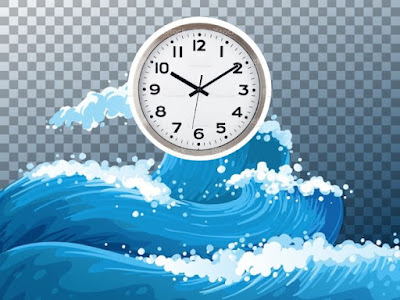
| Time and tide wait for none |
Time and tide wait for none is an age-old adage that emphasizes the importance of time and how it is fleeting. It is a saying that has been repeated countless times in various contexts to remind us of the value of time and how important it is to make the most of it. The phrase is often used to remind us that time is precious and that we should make the most of it before it slips away.
 |
| Avail the chance don't wait for chance |
The phrase "time and tide wait for none" is often attributed to the English poet Geoffrey Chaucer, who wrote in his poem "The Canterbury Tales" that "Time and tide wait for no man." However, the idea of time being unstoppable and unforgiving is not a new one. Many cultures throughout history have had similar sayings that emphasize the importance of time and how it waits for no one.
The phrase "time and tide wait for none" is particularly relevant in today's fast-paced world, where people are constantly busy and stressed. We are always rushing from one task to another, trying to meet deadlines and achieve our goals. It is easy to get caught up in the hustle and bustle of daily life and forget about the importance of taking a break and reflecting on our lives.
One of the key lessons that we can learn from the phrase "time and tide wait for none" is the importance of setting priorities. We only have a limited amount of time each day, and it is up to us to decide how we want to spend it. By setting priorities and focusing on the things that are most important to us, we can make the most of our time and achieve our goals.
Another important lesson that we can learn from the phrase "time and tide wait for none" is the importance of living in the present moment. We cannot change the past, and we cannot predict the future, but we can control how we spend our time right now. By focusing on the present moment and making the most of each day, we can live a fulfilling and meaningful life.
It is also important to remember that time is not just a commodity to be used up. It is something that we should cherish and appreciate. We can use our time to do things that we enjoy, to spend time with our loved ones, and to make a positive impact in the world. By valuing our time and using it wisely, we can create a life that is full of purpose and meaning.
In today's world, where technology has made it possible to do more things in less time, it is easy to become overwhelmed and stressed. We are constantly bombarded with information and distractions, which can make it difficult to focus on the things that are most important. However, it is essential to remember that time is a finite resource, and we must use it wisely.
To make the most of our time, it is important to set clear goals and priorities. We should take the time to reflect on what is most important to us and focus our efforts on those things. We should also learn to say no to things that are not essential, so that we can create more time for the things that really matter.
Another important way to make the most of our time is to develop good time management habits. This means being organized, setting realistic deadlines, and breaking large tasks into smaller, more manageable ones. By developing good time management habits, we can become more productive and efficient, and we can achieve our goals more quickly.
It is also important to take breaks and recharge our batteries. We cannot be productive all the time, and it is important to take breaks and do things that we enjoy. By taking time to relax and recharge, we can come back to our work with renewed energy and focus.
In conclusion, the phrase "time and tide wait for none" reminds us of the importance of time and how it is a precious
commodity that should be cherished and appreciated. We cannot control the passage of time, but we can control how we use it. By setting clear priorities, developing good time management habits, and taking breaks to recharge our batteries, we can make the most of our time and live a fulfilling and meaningful life.
It is also important to remember that time is not something that should be hoarded or saved up for a rainy day. Instead, we should use our time to do things that matter to us and to make a positive impact in the world. This might mean spending time with our loved ones, volunteering in our community, or pursuing our passions and interests.
When we use our time wisely, we can create a life that is full of purpose and meaning. We can look back on our lives with a sense of satisfaction, knowing that we made the most of the time we were given. On the other hand, if we waste our time on trivial things or allow ourselves to become overwhelmed and stressed, we may look back with regret and wonder where the time went.
In the end, the phrase "time and tide wait for none" is a powerful reminder that time is a precious commodity that should be used wisely. We cannot control the passage of time, but we can control how we use it. By setting priorities, developing good time management habits, and taking breaks to recharge, we can make the most of our time and create a life that is full of purpose and meaning. So, let's use our time wisely and make every moment count!
http://bitly.ws/DM8w
(Pervez esabzai)


Comments
Post a Comment